
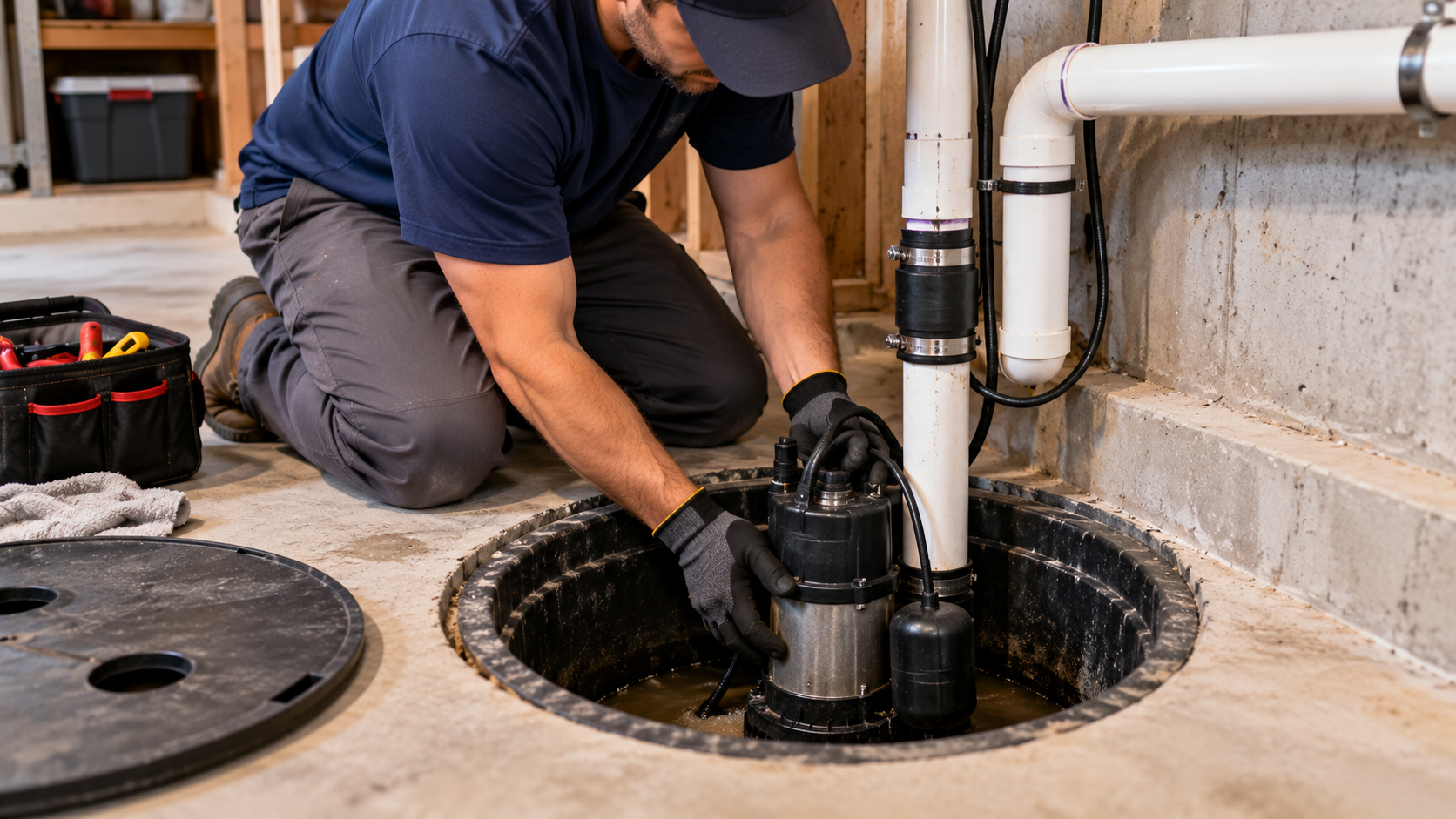
Sump pump repair in 2026 commonly costs about $400 to $550 according to Angi, while HomeGuide lists a broader $200 to $870 repair-and-maintenance range depending on the problem and the amount of labor involved. Emergency service, discharge-line work, electrical faults, failed float switches, and older pumps can move the price higher.
The most important question is not simply “How much does sump pump repair cost?” It is whether the pump itself has failed, the discharge system is blocked, the float switch is stuck, power is unavailable, or the entire drainage setup is undersized for the amount of water entering the pit.
This guide stays focused on sump pump repair, diagnosis, repair-vs.-replacement decisions, and contractor quote comparison. For urgent plumbing situations more broadly, use our emergency plumber checklist. For moisture that may be coming from hidden plumbing leaks rather than the sump system, see our hidden water leak signs guide. Keeping those topics separate helps avoid cannibalization.
Sump Pump Repair Cost in 2026: Quick Answer
| Project type | Typical 2026 planning range | What it usually means |
|---|---|---|
| Typical professional sump pump repair | $400–$550 | Angi’s current repair range |
| Broad repair and maintenance range | $200–$870 | HomeGuide range depending on repair type |
| Sump pump replacement | $309–$755 | Angi’s current replacement range for many projects |
| Complete new system installation | $1,200–$2,500 | Angi estimate when a full system is needed |
| Annual maintenance | Up to $250 | Inspection, cleaning, and minor parts depending on plan |
| After-hours emergency premium | $50–$150+ | HomeGuide range for many emergency calls |
These figures are national planning benchmarks, not guaranteed local prices. A quote should identify whether the contractor is repairing the pump, replacing it, clearing the discharge line, correcting drainage, working on electrical components, installing a backup system, or addressing water damage.
What Does a Sump Pump Do?
A sump pump removes groundwater or drainage water collected in a sump pit, typically in a basement or crawlspace. When the water level rises, a float switch activates the pump. The pump then pushes water through a discharge pipe away from the foundation.
A typical sump system includes:
- Sump pit or basin
- Submersible or pedestal pump
- Float switch
- Check valve
- Discharge piping
- Electrical receptacle or circuit
- Exterior discharge point
- Optional battery or water-powered backup
- Optional alarm
A problem with any one of these components can make the system appear as though the pump itself has failed.
Common Sump Pump Problems
1. Stuck Float Switch
The float switch tells the pump when to turn on and off. If it is jammed against the pit wall, tangled, damaged, or obstructed by debris, the pump may not start when water rises or may continue running after the pit is empty.
A float-switch issue can be relatively simple to repair, but repeated switch failures may point to poor pump positioning, a small basin, or an aging unit.
2. Clogged or Frozen Discharge Line
A pump can run normally but still fail to remove water if the discharge line is blocked. Dirt, debris, ice, roots, crushed piping, or an improperly placed exterior outlet can restrict flow.
During repair, ask the contractor to verify that water is actually leaving the property and not cycling back toward the foundation.
3. Failed Check Valve
The check valve is designed to prevent water in the discharge pipe from flowing back into the pit after the pump shuts off. A failed or missing check valve can cause frequent cycling and unnecessary wear.
4. Electrical Problems
Angi identifies electrical malfunctions as a common sump pump repair issue. A tripped breaker, failed receptacle, damaged cord, poor connection, or motor fault can stop the system.
Because sump pumps combine electricity and water, electrical problems should be handled carefully and by qualified professionals where required.
5. Jammed Impeller
Debris entering the pit can jam the impeller, preventing the pump from moving water properly. Cleaning may solve the problem if the motor and impeller have not been damaged.
6. Worn or Rusted Parts
Older pumps can develop corrosion, worn bearings, noisy motors, seal problems, or reduced pumping capacity. If several components are deteriorated, replacement may make more sense than repeated repair.
7. Pump Runs Constantly
A continuously running pump can result from a stuck float, failed check valve, undersized pump, high groundwater, incorrect pit design, discharge problems, or water returning to the foundation.
Repeatedly replacing the pump without addressing the underlying drainage problem can lead to another failure.
Sump Pump Repair vs. Replacement
Repair can make sense when the pump is relatively new, the failed component is inexpensive, and the overall system is correctly sized and in good condition.
Replacement may make more sense when:
- The pump is old and has a history of failures
- The motor has failed
- Major parts are corroded or worn
- The pump is undersized for the water volume
- Repair cost approaches the price of a new pump
- The unit has flooded repeatedly
- The existing pump type is poorly suited to the pit or application
Angi’s 2026 data lists replacement around $309 to $755 for many projects. If a repair quote is close to that range, ask the contractor to compare the expected remaining life and warranty of the repaired pump against a new unit.
Submersible vs. Pedestal Sump Pumps
| Pump type | Potential advantage | Potential drawback |
|---|---|---|
| Submersible | Quieter, sits in the pit, often higher capacity | More difficult to access for service |
| Pedestal | Motor remains above the pit and is easier to access | More visible and often noisier |
The best choice depends on pit size, required pumping capacity, head height, debris exposure, noise tolerance, and available space.
What Changes Sump Pump Repair Cost?
Failed Component
A switch or valve repair is typically less involved than replacing a motor or correcting a damaged discharge system. Angi notes common repairs include clogged or damaged discharge lines, electrical malfunctions, worn parts, stuck float switches, and jammed impellers.
Emergency Timing
Many sump pump failures happen during heavy rain, which is also when demand for emergency service is highest. HomeGuide lists after-hours emergency premiums around $50 to $150 in many cases.
Access
A clear basement pit is easier to service than a cramped crawlspace, finished room, sealed enclosure, or pit obstructed by stored items. Difficult access adds labor.
Discharge-Line Work
A pump repair quote may grow if the real problem is the discharge line. Repair can involve clearing clogs, correcting slope, replacing a check valve, fixing broken pipe, rerouting exterior discharge, or preventing freezing.
Electrical Work
If the pump is not receiving reliable power, an electrician may be needed for receptacle, circuit, breaker, GFCI, or wiring work. Ask whether electrical work is included in the plumbing or waterproofing quote.
Water Damage
If the basement has already flooded, cleanup, drying, flooring removal, drywall repair, mold remediation, or contents restoration may cost far more than the pump repair itself. Those services are usually separate from the basic sump repair price.
What Should a Contractor Check?
A proper diagnosis should go beyond simply plugging in a new pump. The contractor should evaluate the entire pumping path.
- Water level in the pit
- Float-switch movement
- Pump activation and shutoff
- Motor sound and operation
- Impeller condition
- Check valve
- Discharge piping
- Exterior discharge location
- Electrical power
- Pit size and condition
- Pump capacity
- Backup system if present
Angi’s 2026 guidance notes that professionals typically disconnect power, inspect the pit and discharge line, clean debris, and test the system to confirm proper cycling and automatic shutoff.
How to Tell if Your Sump Pump Needs Service
Call for professional evaluation if you notice:
- Water rising without the pump starting
- Pump running continuously
- Loud grinding, rattling, or humming
- Frequent short cycling
- Water returning to the pit after shutdown
- Visible rust or corrosion
- Discharge line leaking or disconnected
- Pump starts but moves little or no water
- Breaker repeatedly trips
- Backup alarm activates
If there is active flooding and it is safe to do so, protect yourself from electrical hazards and contact an appropriate professional promptly.
Battery Backup and Power-Outage Protection
Power failure is one of the most common reasons a sump pump becomes unavailable during a storm. A backup system can provide protection when the primary pump or utility power fails.
Common backup options include:
- Battery backup sump pump
- Water-powered backup pump where suitable
- Standby or portable generator arrangement
- High-water alarm
The best option depends on local plumbing, electrical service, municipal water availability, outage duration, pit size, and pumping demand. Backup capacity should be sized for the expected water load rather than selected only by price.
Typical Sump Pump Repair Process
- Inspect the water level and pit: The technician checks whether the system is receiving water and whether debris is interfering with operation.
- Verify power: The circuit, receptacle, plug, and pump controls are checked as appropriate.
- Test the float switch: The technician confirms the pump starts and stops at the correct water level.
- Inspect the pump: Motor, impeller, housing, and visible components are checked for wear or blockage.
- Inspect the check valve: The technician looks for backflow and cycling problems.
- Inspect the discharge line: Flow, leaks, blockage, freezing, slope, and exterior termination are checked.
- Repair or replace failed components: The agreed work is completed.
- Test under load: The pit is filled or otherwise tested to verify automatic operation and discharge.
- Review backup protection: Battery, alarm, or secondary pump is tested if present.
What Should Be Included in a Sump Pump Repair Quote?
- Diagnostic or service-call fee
- Exact failed component
- Repair labor
- Replacement parts
- Pump replacement if recommended
- Check-valve work
- Discharge-line work
- Electrical work included or excluded
- Emergency or after-hours surcharge
- Testing after repair
- Backup-system work
- Cleanup
- Parts and workmanship warranty
A useful quote should tell you what failed and why the proposed repair is expected to solve the problem.
Questions to Ask a Sump Pump Repair Professional
- What exactly failed?
- Is the pump itself bad, or is the problem the float, check valve, power, or discharge line?
- How old is the existing pump?
- Does the pump have enough capacity for this pit and discharge height?
- Would repair or replacement be more cost-effective?
- Is the discharge line flowing freely?
- Is water being discharged far enough from the foundation?
- Is a backup pump recommended?
- Do I need a battery, water-powered backup, or alarm?
- Are electrical repairs included?
- What warranty applies?
Sump Pump Repair FAQs
How much does sump pump repair cost?
Angi lists many repairs around $400 to $550. HomeGuide publishes a broader $200 to $870 repair and maintenance range depending on the repair type.
How much does it cost to replace a sump pump?
Angi’s current 2026 data lists professional replacement around $309 to $755 for many projects, with some jobs falling outside that range depending on pump type and labor.
Why is my sump pump running but not pumping water?
Possible causes include a blocked discharge line, jammed impeller, failed check valve, damaged pump, incorrect installation, or insufficient pumping capacity.
Why does my sump pump keep running?
A stuck float, failed check valve, continuous groundwater, undersized pump, or discharge water returning toward the foundation can cause continuous operation.
Can a plumber repair a sump pump?
Yes. Plumbers commonly repair sump pumps and discharge systems. Waterproofing specialists may also handle sump systems when they are part of a broader basement drainage setup.
How often should a sump pump be tested?
Regular testing is wise, especially before wet seasons or major storms. Maintenance frequency depends on the manufacturer, water conditions, pit debris, and how often the pump runs.
Do I need a battery backup?
A backup is worth considering if the basement is vulnerable to flooding, power outages are common, or the primary pump is critical to keeping water out of the home.
Can a sump pump failure cause basement flooding?
Yes. If groundwater continues entering the pit and the pump cannot remove it, water can overflow into the basement or crawlspace.
Final Sump Pump Repair Checklist
- Failure diagnosed before replacement
- Float switch tested
- Check valve inspected
- Discharge line checked
- Electrical power verified
- Pump capacity reviewed
- Repair-vs.-replacement comparison provided
- Backup protection considered
- Final cycling test completed
- Warranty documented
A reliable sump pump repair should do more than make the motor run. The contractor should confirm that water enters the pit, the pump starts automatically, the discharge path is clear, the pump shuts off correctly, and the system has an appropriate backup strategy for the property.
Ready to compare local plumbing options? Visit our Plumbing quote page or browse more homeowner resources in our Plumbing Guides.
Editorial note: This article provides general planning information for U.S. homeowners. Plumbing, electrical, drainage, waterproofing, permit, and code requirements vary by property and jurisdiction. Request a written diagnosis and local quote from qualified professionals.
Pricing references: Current 2026 planning ranges were cross-checked against Angi’s 2026 sump pump replacement and repair guidance and HomeGuide’s sump pump installation and repair data. These are national planning benchmarks, not promised local prices.