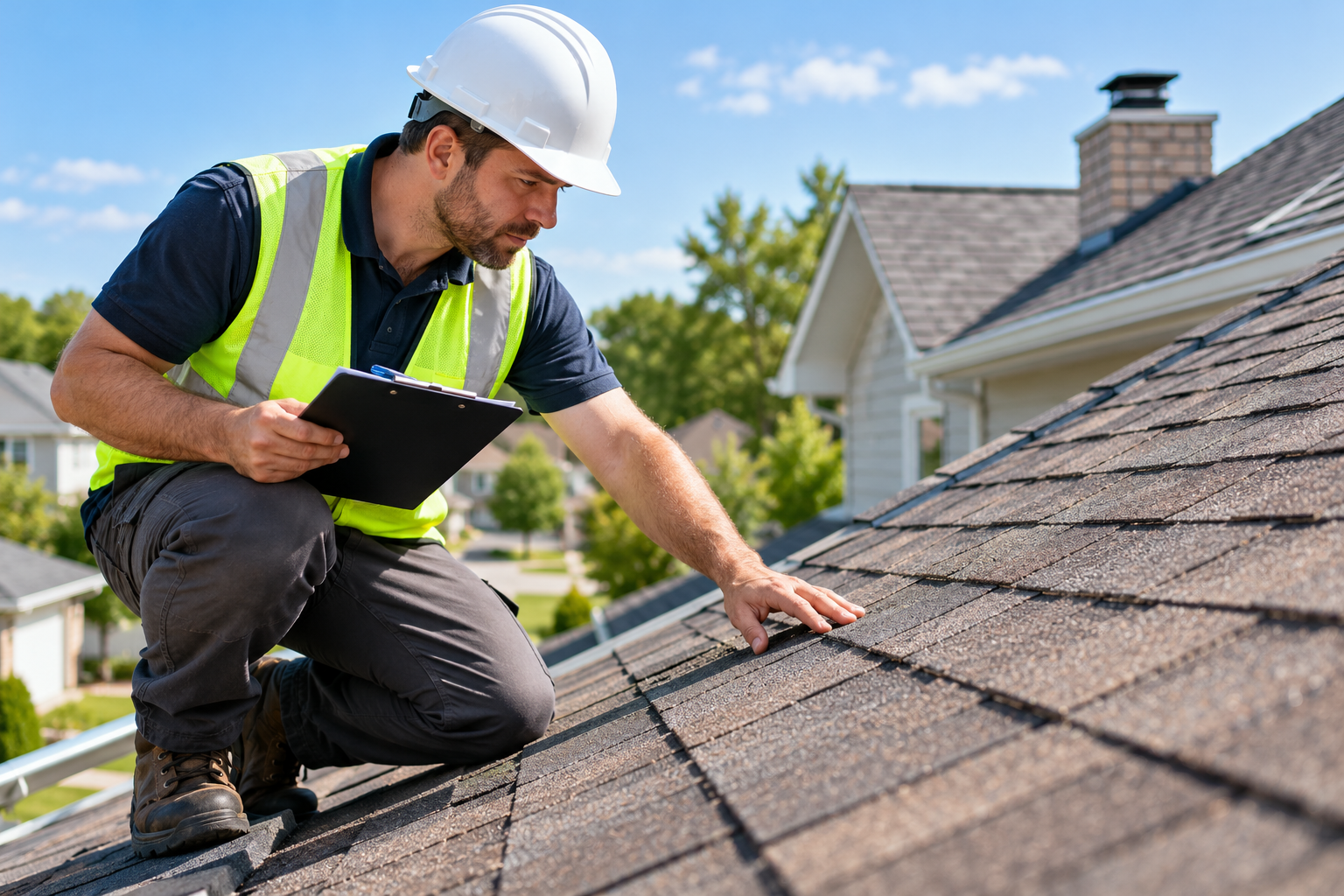
Roof inspection cost in 2026 is typically around $100 to $400 for a standard residential inspection. Angi reports a national average of about $257, with most homeowners paying roughly $125 to $392; HomeGuide lists a similar $100 to $400 average range.
Price depends on roof size, pitch, access, material, inspection method, and whether you need a physical, drone, infrared, or certification-related service. Compare the written scope of each quote rather than price alone.
This guide covers typical pricing, inspection types, what is usually included, and what to ask before booking. For a weather-specific concern, use our storm roof damage inspection checklist instead of turning a general inspection into a storm-damage assessment.
Roof Inspection Cost in 2026: Quick Answer
For most U.S. homeowners, a professional roof inspection costs about $100 to $400. A basic physical inspection often runs $75 to $200, while drone inspections commonly cost about $100 to $450 and infrared inspections about $400 to $600. Roof size, pitch, access, material, inspection method, and reporting requirements can all change the final price.
Roof Inspection Cost by Type
The inspection method has one of the biggest effects on price. A walkable, accessible asphalt-shingle roof may only need a standard physical inspection, while a steep, fragile, multi-story, or difficult-to-access roof may require a drone or another specialized method.
| Inspection type | Typical 2026 planning range | When it may fit |
|---|---|---|
| Physical roof inspection | $75–$200 | Accessible roofs where a visual and hands-on review is practical |
| Drone roof inspection | $100–$450 | Steep, high, fragile, or difficult-to-access roofs |
| Infrared / thermal inspection | $400–$600 | When hidden moisture or thermal anomalies need additional investigation |
| Roof certification add-on | $75–$200 in many cases | When documentation of roof condition or expected serviceability is requested |
| Separate attic inspection | $200–$500 | When attic structure, insulation, moisture, or ventilation needs a separate assessment |
These are national planning ranges, not local quotes. Angi and HomeGuide publish slightly different figures because their data sets, contractor networks, and project definitions differ. Use the ranges to screen bids, then confirm exactly what your local inspector includes.
Physical Roof Inspection Cost
A physical roof inspection generally costs about $75 to $200. This is the traditional approach for roofs that can be evaluated safely from the roof surface, eaves, ladder, attic, ground, or a combination of those locations.
The inspector may review visible roofing materials, flashing, roof penetrations, drainage components, signs of water intrusion, and accessible structural areas. A physical inspection does not automatically mean the inspector will walk every part of the roof. Safety, roof pitch, roof condition, weather, and the risk of damaging fragile materials can limit access.
Drone Roof Inspection Cost
Drone roof inspections usually fall around $100 to $450, although more advanced drone services can cost more. A drone can be useful when the roof is steep, multi-story, unstable, fragile, or otherwise unsafe to walk.
The main advantage is safe visual access to difficult areas and detailed exterior photography. The limitation is that a drone cannot always replace a hands-on evaluation of material condition or an attic review. Before paying extra, ask whether the quoted drone service includes only exterior imagery or also a written inspection report and professional interpretation.
Infrared Roof Inspection Cost
An infrared or thermal roof inspection commonly costs about $400 to $600. Thermal imaging looks for temperature differences that may point to trapped moisture or other conditions that are not obvious during a standard visual inspection.
This method is not automatically necessary for every house. It tends to make more sense when a homeowner, inspector, or roofing professional has a reason to investigate possible hidden moisture, recurring leaks, or unusual roof conditions. Ask what the thermal scan is expected to confirm and how the findings will be documented.
Roof Certification Cost
A roof certification is related to an inspection, but it is not the same service. HomeGuide lists a common certification add-on range of about $75 to $200, while Angi cites roughly $150 to $200 in its current 2026 guide.
A certification usually provides documentation about the roof’s condition and expected serviceability for a specific transaction or requirement. The exact form, acceptance rules, and useful-life language can vary by inspector, market, insurer, lender, and jurisdiction. If you need a certification, confirm that requirement before booking so you do not pay for an inspection that produces the wrong type of document.
What Changes Roof Inspection Cost?
Roof inspection quotes vary because the work is not always comparable. The biggest price drivers are:
- Roof size: Larger roofs take longer to inspect and document.
- Pitch and height: Steep or multi-story roofs can require extra safety measures or remote methods.
- Complexity: Valleys, dormers, skylights, chimneys, and multiple roof lines add inspection points.
- Roofing material: Specialty materials may require more specialized knowledge.
- Inspection method: Drone and infrared services use additional equipment.
- Attic and interior scope: These may be included, limited, or priced separately.
- Report requirements: A verbal review is not the same as a photo-rich written report or certification.
- Local market: Labor, travel, weather, and regional housing conditions affect rates.
Ask each provider to quote the same scope in writing. A lower fee can be misleading if it excludes the attic, photos, a written report, or the documentation you actually need.
What Does a Roof Inspection Include?
A professional roof inspection is a condition assessment, not just a quick look at shingles. InterNACHI’s Standards of Practice include review of roof-covering materials, gutters, downspouts, vents, flashing, skylights, chimneys, other roof penetrations, and the general roof structure from readily accessible areas. Observed signs of active leaks should also be reported.
A practical residential inspection may cover:
- Visible condition of shingles, tiles, metal panels, or other roof covering
- Missing, loose, cracked, worn, or displaced materials
- Flashing at walls, valleys, chimneys, skylights, and penetrations
- Vents, pipe boots, skylights, chimneys, gutters, and downspouts
- Visible sagging, deformation, ponding, or water-entry signs
- Interior or attic moisture evidence where access is included
- Photographs and written recommendations
Not every inspector will walk every roof surface; safety, pitch, weather, and material condition can limit access. If you need photos, thermal imaging, certification, or lender/insurance documentation, make sure those deliverables are stated in the quote.
Free Roof Inspection vs. Paid Roof Inspection
Some roofing contractors offer a free roof inspection before preparing an estimate for repair or replacement work. That can be useful when you already expect to hire a roofer and want an initial assessment connected to a project quote.
A paid inspection may make more sense when you want a stand-alone condition report, need specific documentation, are evaluating a home purchase or sale, want an independent opinion, or need a certification-related service. Angi notes that contractor inspections offered during the estimate process may be less extensive and may not satisfy every lender or insurance requirement.
The key question is not “free or paid?” but what is included and what decision will the inspection support? Ask whether the provider will give you a written report, photos, inspection limitations, recommended next steps, and a separate repair estimate if work is suggested.
Roof Inspection vs. Roof Certification
Homeowners often use these terms interchangeably, but they serve different purposes.
| Service | Main purpose | Typical deliverable | Planning cost |
|---|---|---|---|
| Roof inspection | Evaluate visible roof condition and identify concerns | Findings, photos, recommendations, and sometimes repair estimates | Often about $100–$400 for a standard residential inspection |
| Roof certification | Provide a formal statement about roof condition or expected serviceability for a specific requirement | Certification letter or document, usually after an inspection | Often about $75–$200 as an add-on, depending on provider and market |
If a lender, insurer, buyer, seller, or other party requests a certification, ask exactly what format or qualification they require before hiring an inspector. A general inspection report is not automatically a certification, and a certification should not be treated as a guarantee that a roof will never leak.
When Should You Schedule a Roof Inspection?
A roof inspection is most useful when the result will help you make a maintenance, repair, purchase, sale, or budgeting decision. Common times to schedule one include:
- Before buying or selling a home: Especially when the roof’s age, repair history, or condition is uncertain.
- When you see recurring moisture signs: Ceiling stains, attic moisture, or repeat leaks may justify professional evaluation.
- As an older roof approaches major repair decisions: An inspection can document current condition before you request project quotes.
- Before major roofing work: A condition assessment can help define the scope you want contractors to price.
- When maintenance has been inconsistent: A professional review can establish a baseline and identify priority items.
- After severe weather or visible impact concerns: For a storm-specific process, use our storm roof damage inspection checklist rather than relying only on this general cost guide.
Angi recommends annual professional inspections as a general maintenance benchmark, but the right frequency depends on roof age, climate, nearby trees, material, prior leaks, and local conditions. If your roof has no known issues, ask a qualified local professional what inspection cadence makes sense for that specific system.
How to Compare Roof Inspectors and Quotes
Do not compare only the total inspection fee. Give each provider the same information about your home and ask for the same deliverables so the quotes are genuinely comparable.
- Inspection method: Physical, drone, infrared, ground/eave, attic, or a combination?
- Areas included: Roof covering, flashing, penetrations, drainage, attic, interior moisture signs, and structural observations?
- Written report: Are photographs, findings, limitations, and recommendations included?
- Certification: Is it included, optional, or unavailable?
- Repair pricing: Will repairs be quoted separately from the condition report?
- Turnaround: When will you receive the report? HomeGuide says reports are often delivered within one to two business days, while Angi notes many inspection services provide written findings within roughly 24 to 48 hours.
- Credentials: Ask about relevant local licensing, insurance, inspection training, and experience with your roof type.
If an inspection identifies a larger roofing project, keep the diagnosis separate from the budgeting decision. For replacement planning, use our roof replacement cost guide; for the repair-versus-replacement decision, see our roof repair vs. replacement guide.
Questions to Ask Before Booking a Roof Inspection
Before you schedule, ask a short set of written questions so you know exactly what you are buying:
- What inspection method will you use for my roof?
- Is the attic or interior moisture review included?
- Will I receive a written report with photographs?
- Is a roof certification included, available for an extra fee, or not offered?
- Will any repair estimate be separated from the inspection findings?
- Are there areas you may not be able to inspect because of access, weather, height, or roof condition?
- When should I expect the final report?
A complete answer to these questions makes it much easier to compare a $150 inspection with a $300 inspection without assuming they cover the same work.
Roof Inspection FAQs
How long does a roof inspection take?
Many professional roof inspections take about one to two hours, but large, steep, complex, or specialty roofs can take longer. Written findings are often delivered within roughly 24 to 48 hours or one to two business days.
Can a roofer inspect my roof for free?
Yes. Some contractors offer a basic inspection when preparing a repair or replacement estimate. Ask whether it includes photos, an attic review, a written report, or certification. If you need independent documentation, a paid inspection may be a better fit.
Is a drone roof inspection enough?
Sometimes. A drone is useful for exterior documentation when a roof is unsafe to walk, but it may not replace hands-on material evaluation or an attic review.
Does homeowners insurance pay for a roof inspection?
Coverage depends on the policy, reason for the inspection, and insurer requirements. Ask your provider what documentation it needs before you book.
How often should a roof be inspected?
Annual professional inspection is a common maintenance benchmark, but roof age, material, climate, trees, prior leaks, and local conditions matter. Ask a qualified local professional what cadence fits your roof.
Is a roof inspection the same as a roofing estimate?
No. An inspection evaluates condition and identifies concerns; an estimate prices a defined repair or replacement scope.
A Practical Next Step for Homeowners
Before requesting a quote, note the roof’s approximate age, material, number of stories, known leaks or moisture signs, and whether you need a standard report, drone imagery, thermal imaging, or certification. Give the same information to each provider and request the scope in writing.
The goal is not simply the cheapest inspection; it is enough reliable information to decide whether you need maintenance, a targeted repair, or comparable roofing proposals.
Ready to compare options? Visit our Roofing quote page or browse our Roofing Guides.
Editorial note: This article provides general planning information for U.S. homeowners and is not a substitute for an on-site inspection, engineering opinion, insurance determination, lender requirement, or local code advice. Prices, licensing rules, inspection methods, and documentation requirements vary by location and provider. Request a written scope and local quote for the property.
Pricing references: Current 2026 planning ranges in this guide were cross-checked against Angi’s roof inspection cost data and HomeGuide’s roof inspection cost guide. Inspection-scope terminology was checked against the InterNACHI Standards of Practice.