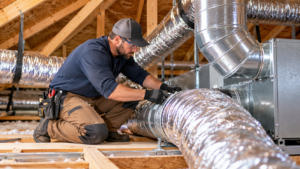
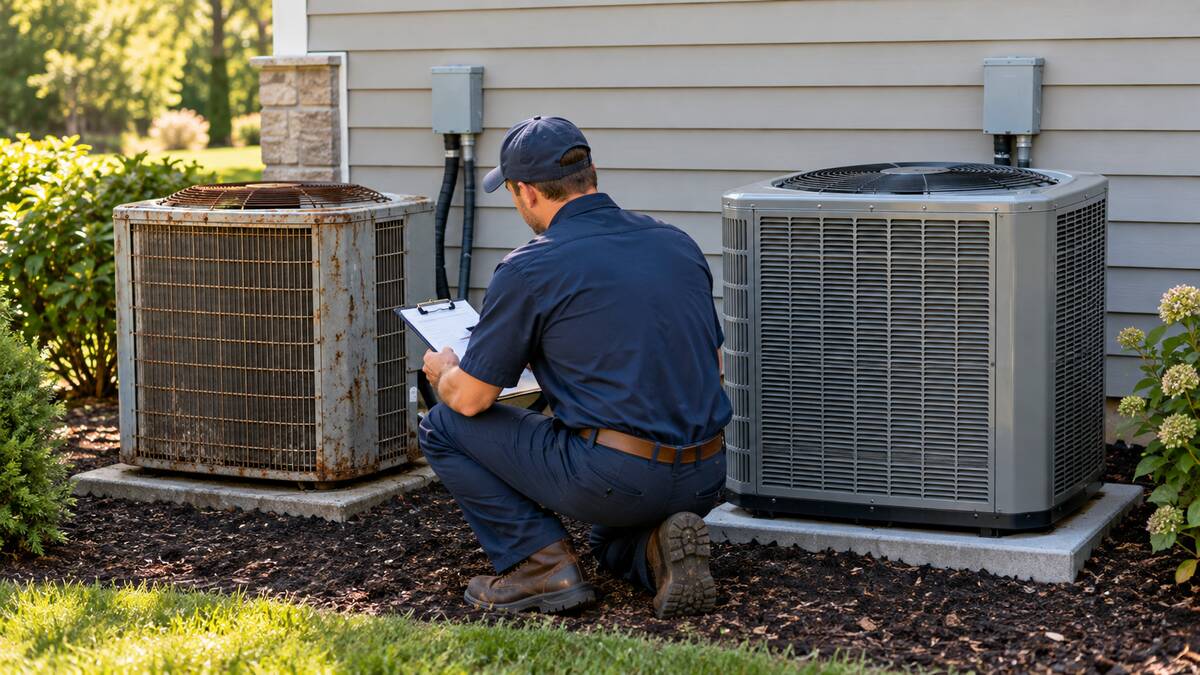
Repair is often sensible for a reliable, properly sized system with a contained fault. Replacement deserves comparison when failures repeat, major components are involved, comfort remains poor or the system no longer fits the home.
This guide is designed for U.S. homeowners who want to understand the decision before requesting estimates. Prices, code requirements, permits, product availability and licensing rules vary by location. Treat examples as planning guidance, then confirm the actual condition and local requirements with a qualified licensed HVAC contractor and the authority having jurisdiction. Apply that point specifically to the written repair or replace HVAC scope and the conditions documented for this hvac project.
Repair Or Replace Hvac: what matters most
Base the decision on condition, remaining service life and total scope rather than one symptom. A targeted repair is valuable when it addresses the cause; replacement is stronger when failures are broad, recurring or tied to an obsolete system. Apply that point specifically to the written repair or replace HVAC scope and the conditions documented for this hvac project.
- Document the starting point: Record equipment labels, comfort complaints and duct condition before contacting contractors.
- Request comparable scope: Every proposal should address load calculation, matched equipment, efficiency ratings and commissioning.
- Protect the result: Confirm how the contractor will manage electrical capacity, condensate drainage and local climate.
Quick planning framework
| Project situation | What it usually means |
|---|---|
| Likely repair | Single confirmed fault, available part and otherwise good performance |
| Compare both | Major repair, aging equipment, uneven comfort or rising operating cost |
| Replacement leaning | Repeated breakdowns, obsolete components, unsafe condition or poor sizing |
For repair or replace HVAC, define the desired outcome and document the current condition. A comparable scope should identify what stays, what changes, the products or performance level expected, site protection, testing, cleanup and warranty responsibilities. This prevents an incomplete bid from looking artificially low.
Key factors that change the scope and price
- Diagnosis and price of the current repair
- Age, maintenance history and earlier repair spending
- Availability and warranty of replacement parts
- Comfort, humidity, noise and room-to-room balance
- Energy use, equipment sizing and duct performance
- Planned time in the home and financing terms
No two hvac projects are identical. Access, concealed conditions, local rules and the age of connected systems can change the work. Ask bidders to list assumptions and provide unit prices or an approval process for conditions that cannot be confirmed before work begins. Apply that point specifically to the written repair or replace HVAC scope and the conditions documented for this hvac project.
Options and tradeoffs
| Option | Where it may fit | What to verify |
|---|---|---|
| Repair | Contained problem on an otherwise suitable system | Confirm part and labor warranty |
| Major refurbishment | Specific components can restore reliable operation | Avoid stacking expensive repairs on a mismatched system |
| Replacement | System-level issues or repeated failures | Insist on sizing and commissioning |
The most expensive option is not automatically the best fit for repair or replace HVAC. Installation quality, preparation, compatible components and final verification often matter as much as the product. Require identifiable models, materials or performance standards instead of vague labels such as standard or premium.
A practical step-by-step process
- Step 1: Ask for the failed component and diagnostic evidence in writing
- Step 2: Review repair history and total spending over recent seasons
- Step 3: Get replacement proposals based on load and distribution conditions
- Step 4: Compare multi-year ownership cost, not only today’s invoice
Keep the repair or replace HVAC file together: photos, measurements, product sheets, permits, approvals, change orders and inspection records. Written records matter when work will be concealed or when several trades must coordinate before the final walkthrough.
What a complete quote should include
For hvac work, the proposal should address equipment, load calculation, ductwork, controls, electrical work, permits and commissioning. It should also identify site protection, working hours, cleanup, payment milestones, schedule assumptions, change-order procedure and who is responsible for permits and inspections. Apply that point specifically to the written repair or replace HVAC scope and the conditions documented for this hvac project.
- Scope: quantities, locations and work boundaries.
- Products: manufacturer, model, material, performance rating or allowance.
- Labor: removal, preparation, installation, testing and finish responsibilities.
- Exclusions: restoration, hidden damage, utility fees or related work not included.
- Protection: liability insurance, required licensing, product warranty and workmanship warranty.
Red flags to slow down for
- Pressure to sign immediately or pay a large amount without a clear written scope.
- A total price with no products, quantities, assumptions or exclusions.
- Requests to skip permits when local rules require them.
- Unverifiable license or insurance information where those credentials apply.
- Promises of guaranteed savings, insurance coverage, resale value or an exact completion date despite unresolved conditions.
- Changes made verbally without price, schedule and scope recorded in writing.
How to compare contractors fairly
Give each shortlisted contractor the same information about equipment labels, comfort complaints and duct condition. Normalize proposals by adding missing allowances, separating optional upgrades and flagging exclusions. Then compare experience, communication, schedule, warranty and the complete delivered result—not only price. Apply that point specifically to the written repair or replace HVAC scope and the conditions documented for this hvac project.
Verify relevant licensing and insurance with the issuing authority. For repair or replace HVAC references, prioritize recent projects with a similar home and scope, and ask how the contractor handled changes, cleanup, delays and warranty follow-up.
Quote checklist for repair or replace HVAC
Before accepting a proposal, confirm that the contractor has addressed both the physical scope and the administrative details. The written quote should make load calculation, matched equipment, efficiency ratings and commissioning easy to identify without relying on verbal promises. Apply that point specifically to the written repair or replace HVAC scope and the conditions documented for this hvac project.
- Confirm the work area, quantities and existing-condition assumptions.
- List product names, models, performance ratings or defined allowances.
- Identify permits, inspections, disposal, protection and finish-restoration responsibilities.
- State payment milestones, schedule, warranty terms and the change-order process.
- Separate required work from upgrades so proposals can be compared fairly.
A complete quote should explain exclusions. If an unknown cannot be priced in advance, request a unit price or written method for approving additional work. Apply that point specifically to the written repair or replace HVAC scope and the conditions documented for this hvac project.
Questions homeowners often ask
Is system age enough to decide?
No. Age matters with condition, repair history, efficiency and comfort.
What is a major repair?
Examples can include compressors, heat exchangers, coils or control systems, but significance depends on system and coverage.
Can new equipment fix hot and cold rooms?
Only if the cause is addressed. Duct, insulation, airflow and zoning issues may remain.
Should I use a repair-cost formula?
Simple formulas can be a starting point, but diagnosis, safety, fit and expected reliability deserve more weight.
Can I replace only one component?
Sometimes, but compatibility, rated performance, refrigerant, age and warranty must be checked.
Helpful next step
Write a one-page description of the problem, desired result, timing and known constraints. Take clear photos and collect any earlier invoices, plans or model numbers. You can then compare HVAC quote options using a more consistent scope. Apply that point specifically to the written repair or replace HVAC scope and the conditions documented for this hvac project.
How to review repair or replace HVAC proposals
Use the same follow-up questions with every shortlisted company. Written answers make differences in assumptions visible and create a clearer record if the scope changes later. Keep the final repair or replace HVAC comparison attached to the proposal.
- Is system age enough to decide? Ask the bidder to answer this in writing and tie the answer to the proposed products, labor and exclusions.
- What is a major repair? Ask the bidder to answer this in writing and tie the answer to the proposed products, labor and exclusions.
- Can new equipment fix hot and cold rooms? Ask the bidder to answer this in writing and tie the answer to the proposed products, labor and exclusions.
After the technical scope is aligned, compare payment timing, start-date assumptions, cleanup, warranty service and who will be your day-to-day contact. A slightly higher complete proposal may offer better value than a low bid that leaves essential work undefined. Keep the final repair or replace HVAC comparison attached to the proposal.
Related HVAC guides
- HVAC Replacement Cost Guide: Equipment, Labor and Hidden Factors
- Central Air vs. Heat Pump: Which System Fits Your Home?
- HVAC Sizing and Efficiency Ratings: What SEER2, HSPF2 and Load Mean
Editorial note: This article provides general planning information and is not engineering, legal, insurance or code advice. Local conditions and requirements control. For additional background, see U.S. Department of Energy heat-pump guidance. Apply that point specifically to the written repair or replace HVAC scope and the conditions documented for this hvac project.